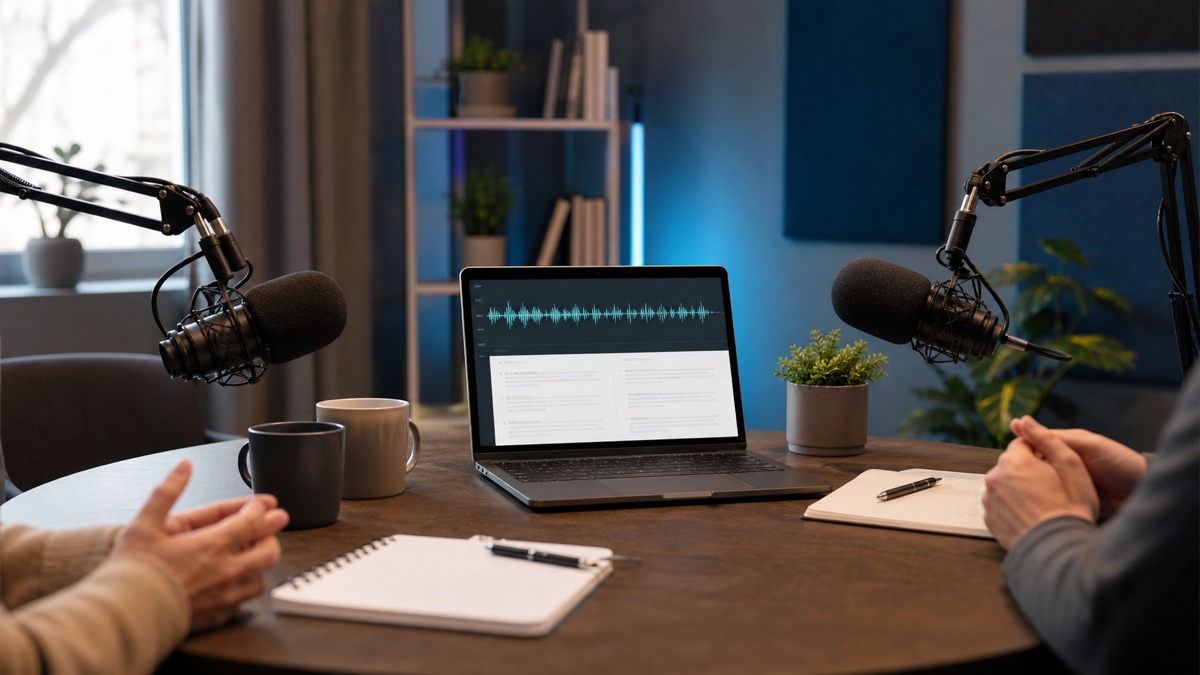
Using speech to text for meetings, interviews, and podcasts starts with the same technical action but ends with three different responsibilities. A meeting transcript supports decisions and follow-up. An interview transcript supports research and attributable quotation. A podcast transcript supports publishing, discovery, and captions. Applying one generic cleanup checklist to all three misses what matters.
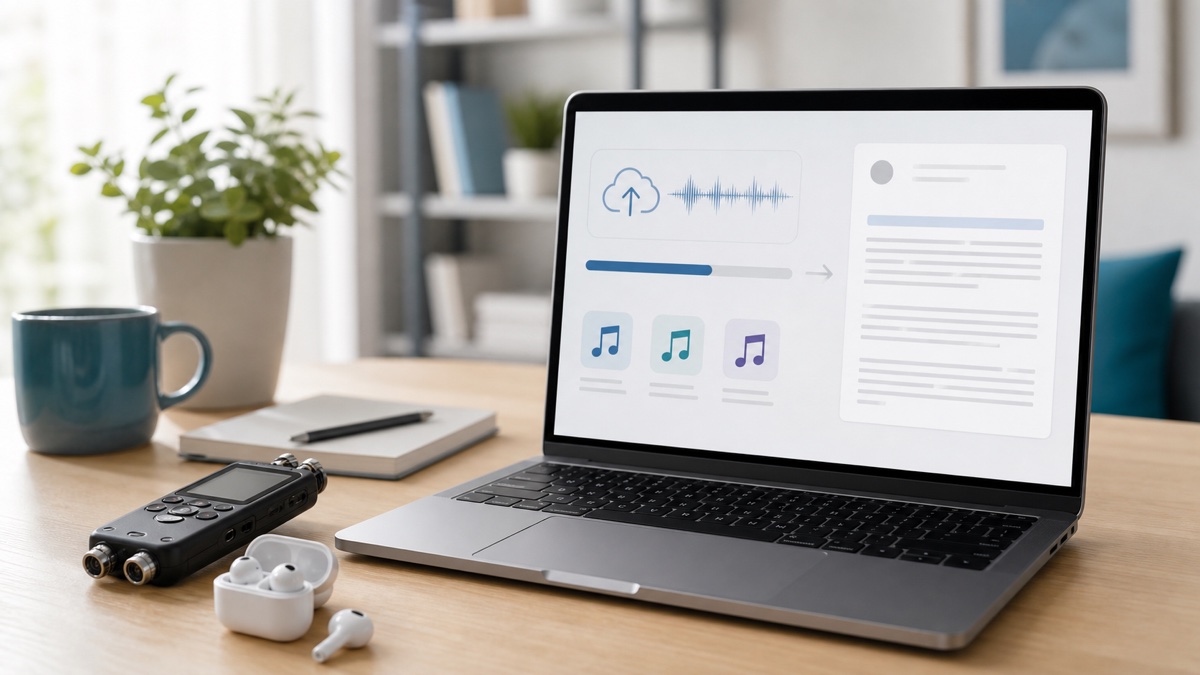
In Muse Voice, each workflow can begin with an upload, browser recording, or supported media URL. The workspace returns timed text and can separate speakers, but people still decide what is accurate enough to use.
Shared setup for conversational audio
Choose the clearest source recording. For a remote session, prefer the platform's direct capture over a room microphone replaying laptop speakers. In person, position the microphone so no participant is consistently distant.
At the start, have participants identify themselves and say unfamiliar names or terms clearly. Limit overlapping speech around decisions and quotations. Select the known language when appropriate, and enable speaker separation when attribution will matter later.
For long sessions, test a normal five-minute section rather than the quiet opening. Confirm that voices, language, and timing are usable before processing the whole source.
Workflow 1: meetings need accountable outcomes
The primary output of meeting transcription is usually not polished prose. It is an auditable path from discussion to decisions, owners, dates, objections, and unresolved questions.
Review speaker labels first. Rename a person only after checking several segments, then search for dates, quantities, names, and commitment language such as “I will,” “we agreed,” or “not approved.” Replay those passages from their timestamps.
Create the summary outside the source transcript. List each decision and action with its owner and deadline, while retaining the full text as context. Send consequential commitments to participants for confirmation; automatic transcription should not silently become the authoritative agreement.
For confidential or regulated meetings, follow the organization's rules for consent, storage, access, and deletion before uploading anything.
Workflow 2: interviews need faithful attribution
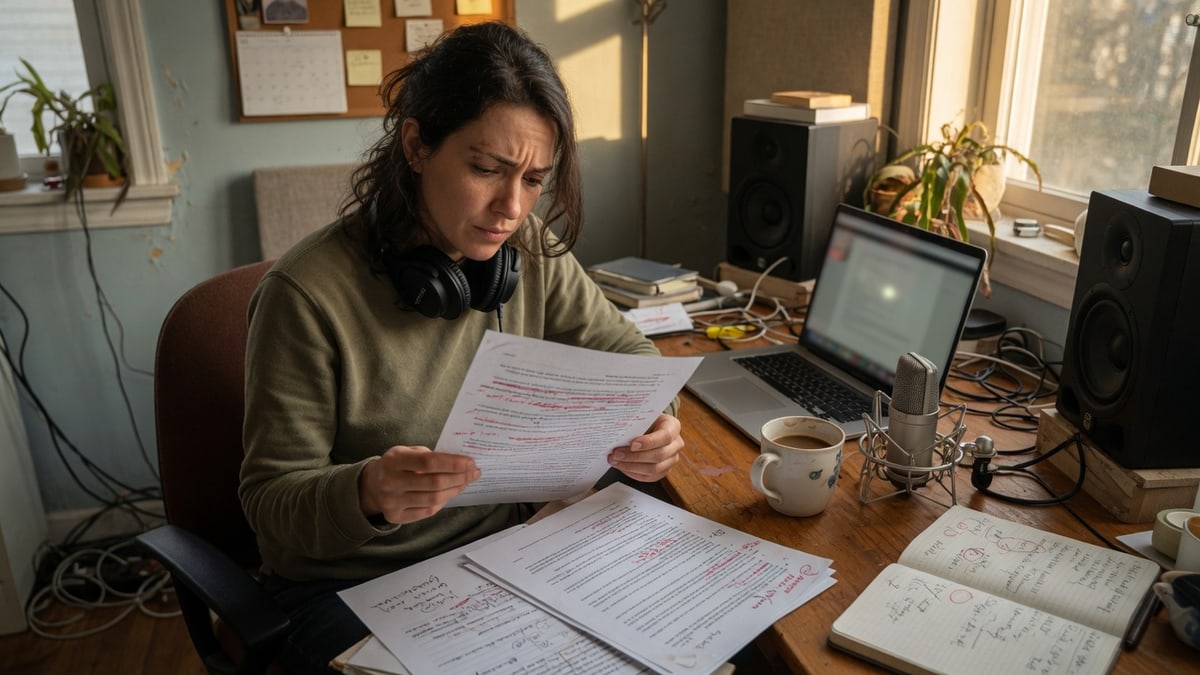
An interview transcript is evidence for later interpretation. Preserve what the participant said before removing filler or reorganizing themes. Check the interviewer and participant labels around interruptions, since a plausible sentence assigned to the wrong voice can corrupt the record.
Build a review list of proper nouns, institutions, dates, and domain terms. Replay every quotation selected for publication word for word, including the surrounding question and answer. If editing a quote for length, follow the publication's standards and never change its meaning.
Research interviews may carry consent, anonymization, and retention requirements. Speaker labels generated by a system do not replace the study's identity controls. Keep adapted notes separate from the verified transcript.
Workflow 3: podcasts need multiple deliverables
A podcast may yield show notes, an article outline, pull quotes, a guest transcript, and timed captions. Review one source transcript before producing those branches so names and terminology remain consistent.
Start with the guest's identity, title, brands, URLs, episode-specific claims, and any sponsor wording. Then mark topic changes for show-note navigation. If creating written content, paraphrase in a separate document rather than rewriting the verbatim record.
Generate SRT or VTT from the final edited episode, not the rough cut. The MDN WebVTT reference explains the web caption format. Test timing in the destination player, because correct transcript text can still form poor caption cues.
Use a risk-based review order
Across all three cases, review high-impact details first:
- Identity and speaker attribution.
- Numbers, dates, negations, and commitments.
- Quotations and claims intended for publication.
- Specialist names and terminology.
- Paragraphing, punctuation, and presentation.
This order prevents cosmetic editing from consuming time while a more important recognition error remains unnoticed.
Choose exports by destination
Use TXT for lightweight copy, DOCX for continued editing, and PDF for a stable reading version. SRT and VTT serve timed-caption workflows. JSON is appropriate when another system needs structured segments, speakers, or timing.
Generate these files only after correcting the shared transcript. Otherwise, the same name or number may be fixed differently in meeting notes, captions, and an article draft.
Keep the boundary visible
Speech recognition does not confirm that a statement is true, that a participant approved a decision, or that publication consent exists. It creates a navigable representation of the recording. Human reviewers remain responsible for consequential facts, quotations, permissions, and final deliverables.
Use Muse Voice speech to text to connect the recording with its timed draft and reviewed exports. Then apply the checklist that matches the real job: accountability for meetings, fidelity for interviews, and coordinated publishing assets for podcasts.
FAQ
Which workflow needs speaker labels most?
Meetings and interviews usually depend on attribution, while podcasts also benefit when creating a readable guest transcript. Confirm labels around interruptions instead of trusting every automatic transition.
Can a meeting transcript serve as approved minutes?
It can supply the source record, but participants or the responsible owner should confirm consequential decisions, assignments, and dates before treating a summary as authoritative.
Should podcast captions use the recording or transcript draft?
Generate timing from the final edited episode. Correct the text, export SRT or VTT, and test the file in the publishing player.